
Electric Clothes Drying Rack Market Outlook 2026: Where Is Demand Growing Next?
The electric clothes drying rack market is no longer limited to the United Kingdom, Europe, Australia and other established cold-weather markets.
As consumers become more aware of energy costs, indoor humidity, limited living space and fabric care, heated drying racks are gaining relevance in a wider range of countries. For importers, distributors, retailers and private-label brands, the second half of 2026 may offer a practical opportunity to introduce this product category into selected emerging markets.
However, global expansion should not mean selling the same model everywhere. Voltage, plugs, safety certification, climate, household habits and retail positioning must all be considered.
This article examines the most promising markets beyond the traditional regions and explains how buyers can prepare their product range for late 2026 and 2027.
The Market Is Moving Beyond Its Original Core Regions
The rapid growth of heated airers in the UK between 2021 and 2023 helped educate consumers about an alternative way to dry laundry indoors.
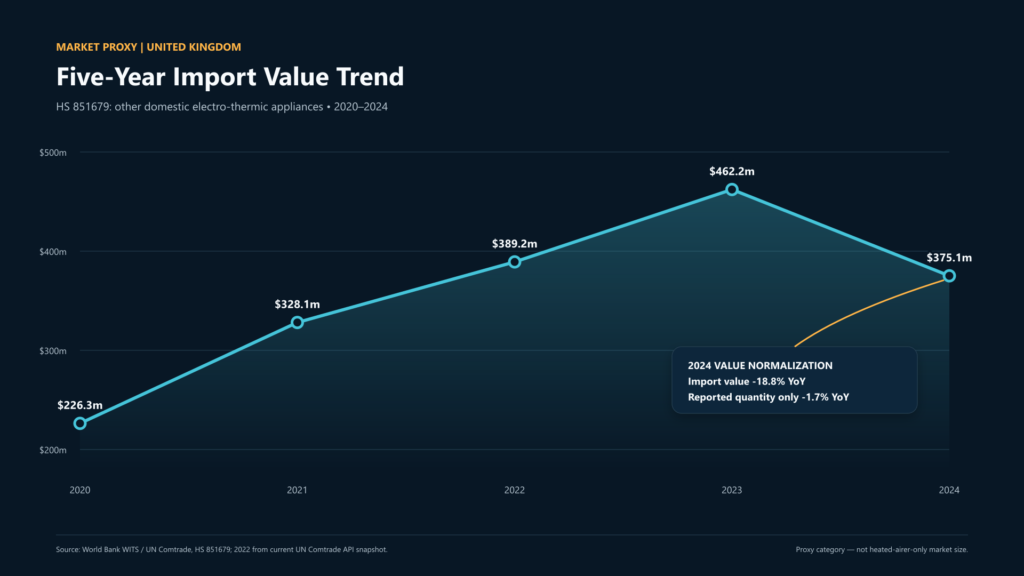
Although international customs systems do not provide a dedicated HS code exclusively for heated airers, HS 851679—“other domestic electro-thermic appliances”—provides a useful directional indicator.
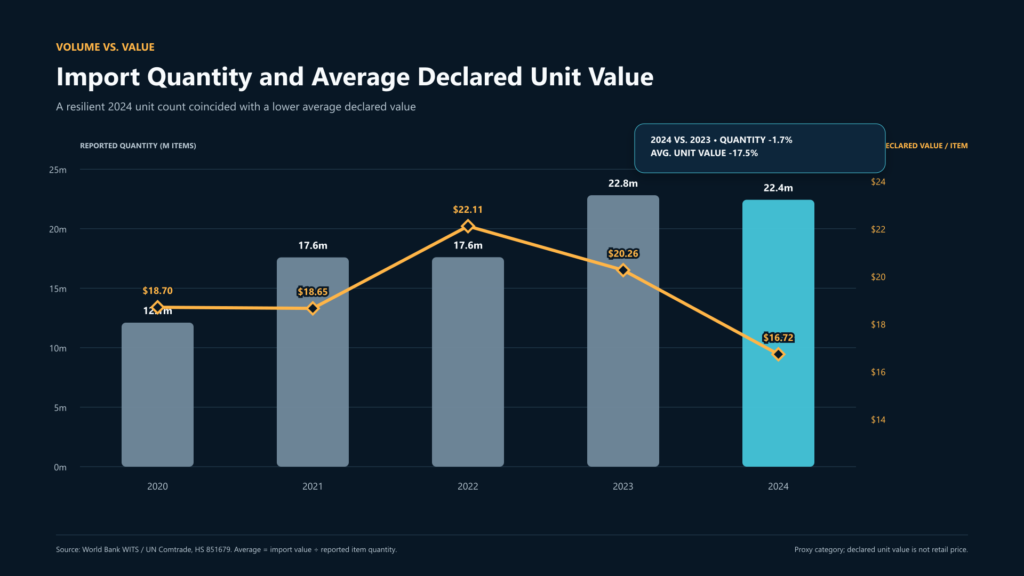
UK imports under this category reached approximately US$462.2 million in 2023, with 22.81 million reported units. In 2024, import value declined to approximately US$375.1 million, while reported volume remained close to 22.43 million units. Based on these figures, the average declared value decreased by approximately 17.5%, while volume fell by less than 2%.
This does not prove that every imported unit was a heated clothes airer. Nevertheless, it suggests an important market pattern: demand for domestic electro-thermic appliances remained comparatively resilient, while price competition and product-mix pressure increased.
For buyers, this means that the next stage of the market will not depend only on offering the lowest price. Product safety, functionality, retail presentation and market-specific configuration will become more important.
Why an Electric Clothes Drying Rack Can Enter New Markets
An electric clothes drying rack solves several consumer problems at the same time.
It allows users to dry laundry indoors during rain, snow or humid weather. It folds away when not in use, making it suitable for apartments and smaller homes. In addition, its heated aluminium rails provide gentle heat for towels, shirts, underwear, children’s clothing and delicate garments.
Unlike a tumble dryer, a heated airer does not tumble or continuously move the fabric. Therefore, it can be positioned as a supplementary laundry appliance for consumers who want to:
- dry small or medium loads;
- reduce frequent use of a tumble dryer;
- protect delicate fabrics;
- manage laundry in apartments;
- dry clothes during rainy or cold seasons;
- create additional drying capacity for family laundry.
The strongest opportunity is not to describe the product as a complete replacement for every tumble dryer. Instead, retailers should present it as a flexible, lower-wattage indoor drying solution for specific loads and daily situations.
Five Markets Buyers Should Watch in 2026
1. Canada: A Supplementary Laundry Product for Winter and Apartment Living
Canada is one of the strongest potential expansion markets for 120V heated drying racks.
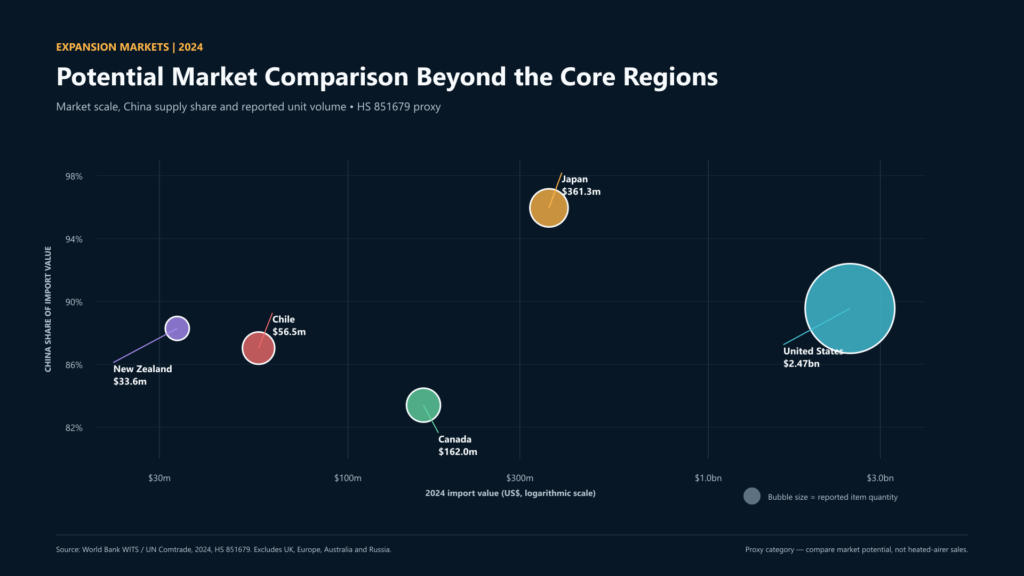
In 2024, Canada imported approximately US$162 million of products under HS 851679. Imports from China accounted for around US$135 million, demonstrating an established supply channel for domestic electro-thermic appliances.
Heated clothes drying racks are already available through Amazon Canada and Walmart Canada. However, the category remains less developed than it is in the UK. Existing listings range from small portable drying products to three-tier heated airers, which indicates market availability but also fragmented product positioning.
Because clothes dryer ownership is already high in Canada, retailers should not position the heated airer as a direct replacement for the household dryer. Statistics Canada has historically reported dryer ownership above 80% of households. Therefore, the better positioning is a supplementary appliance for delicate garments, small loads, apartments and seasonal indoor drying.
For the Canadian market, buyers should prepare:
- 120V/60Hz electrical specifications;
- English and French packaging where required;
- cETL, cUL or CSA-recognised certification;
- timer and overheat protection;
- strong apartment and fabric-care marketing content.
Health Canada advises consumers to purchase plug-in electrical products carrying recognised certification marks such as CSA, cUL or cETL.
2. New Zealand: One of the Most Practical Near-Term Opportunities
New Zealand offers a particularly attractive opportunity for buyers already sourcing products for Australia.
The market uses a similar electrical platform, and major retailers are already selling heated airers. Bunnings New Zealand currently lists an 18-rail heated winged airer with adjustable temperature and a timer of up to 24 hours. Kogan New Zealand also sells a heated drying rack with a timer and verified customer ratings.
In 2024, China exported approximately US$16.9 million of HS 851679 products to New Zealand, while Australia was another important supplier.
Energy efficiency is also an active consumer consideration. New Zealand’s Energy Efficiency and Conservation Authority states that energy costs and appliance efficiency influence dryer purchasing decisions, while heat-pump models now account for around 45% of new tumble-dryer purchases.
A heated airer should not be marketed as having the same drying performance as a heat-pump dryer. Instead, it can occupy a lower-purchase-price segment for smaller loads, rainy days and consumers who do not want to run a full tumble-dryer cycle.
For New Zealand, the recommended assortment is:
- an entry-level winged heated airer;
- a timer-controlled version;
- a larger three-tier or four-tier model;
- an optional heat-retention cover;
- a compact carton designed for e-commerce delivery.
New Zealand suppliers must ensure that electrical products meet the country’s fundamental safety requirements before sale.
3. Chile: A Southern Hemisphere Market and Regional Gateway
Chile is one of the clearest Latin American opportunities for the electric clothes drying rack market.
Heated drying racks are already visible on Mercado Libre Chile and Lider, one of the country’s major retail platforms. Current listings include 18-rail, 230W foldable heated airers and larger tower-style models with temperature controls.
China exported approximately US$37.9 million of HS 851679 products to Chile in 2024. More importantly, Chile also re-exported products in this category to Bolivia, Peru, Uruguay, Paraguay and Argentina. This suggests that Chile can function as more than a domestic test market; it may also serve as a regional distribution base.
Chile provides another commercial advantage: its winter sales season occurs at a different time from the Northern Hemisphere. Importers can therefore use Southern Hemisphere demand to reduce the seasonality of heated airer sales.
For Chile, buyers should focus on:
- Spanish packaging and instructions;
- 220V/50Hz configuration;
- locally compliant plug and power cord;
- winged models for promotional retail;
- tower models for urban family households;
- temperature controls and timers;
- SEC certification preparation.
Electrical products regulated in Chile must be certified and carry the applicable SEC certification mark before commercial sale.
4. Japan: A Localisation-Intensive Premium Opportunity
Japan is not the easiest market to enter, but it offers an interesting premium niche.
Japanese consumers already use indoor clothes-drying dehumidifiers, bathroom drying systems and compact laundry appliances. Heated drying racks are also available through Rakuten, including 100V winged and three-tier products with heated aluminium rails.
One Rakuten model is positioned as a combined indoor drying rack and towel warmer, with 230W power, thermostat protection and a foldable frame. Another three-tier listing promotes 36 heated rails and a constant operating temperature of approximately 45–55°C.
The opportunity is not simply to export an existing European model. Buyers need a fully localised product:
- 100V and 50/60Hz compatibility;
- Japanese instructions and retail packaging;
- compact dimensions;
- quiet operation;
- minimal visual design;
- clear safety warnings;
- PSE compliance assessment.
Japan’s Ministry of Economy, Trade and Industry requires importers to determine the applicable electrical product classification and follow the required PSE procedures.
For this market, a compact premium winged airer may be more suitable than a very large tower model.
5. United States: A Selective Niche Rather Than a Mass-Market Launch
The United States has a very large appliance market, but heated airers should initially be treated as a focused niche.
In 2023, the US imported more than US$2 billion of products under HS 851679, with China supplying approximately US$1.79 billion. Once again, this category includes many domestic electro-thermic appliances and should not be interpreted as heated airer sales alone.
Amazon US already carries several winged and three-tier heated drying racks. In addition, a 2026 US consumer article described heated drying racks as gaining attention among consumers looking for lower-running-cost options for small loads, delicate fabrics and limited spaces.
The most suitable US customer groups include:
- apartment residents;
- consumers in the Northeast and Pacific Northwest;
- buyers drying delicate or expensive clothing;
- small households;
- recreational vehicle users;
- consumers seeking supplementary laundry capacity.
A broad national supermarket launch would require significant consumer education. Therefore, an Amazon-first, direct-to-consumer or specialist-retailer strategy is more realistic. The product should use a 120V/60Hz configuration and obtain the electrical safety certification expected by the intended retailer or sales channel.
What Buyers Will Prioritise in the Second Half of 2026
Safety Documentation Will Matter More Than a Small Price Difference
Price competition will remain strong. However, recalls and electrical safety incidents can quickly remove an entire product line from the market.
Professional buyers will increasingly request model-specific test reports, component lists, temperature-rise testing, abnormal-operation testing, plug and cable documentation, production traceability and quality-control records.
A low quotation is not commercially attractive if the product cannot pass a retailer’s compliance review.
Two Product Levels Will Perform Better Than One Generic Model
For a new market, buyers should avoid launching too many similar SKUs.
A practical starting assortment includes two core products.
The first should be an affordable winged heated airer with a foldable aluminium structure. It can attract first-time buyers and support promotional campaigns.
The second should be a larger multi-tier electric clothes drying rack with a timer, temperature control and optional cover. This product provides more drying space and supports a higher retail price. The winged model generates traffic. The tower model creates margin.
Local Electrical Specifications Must Be Decided Before Production
A global product range requires more than changing the plug at the end of production.
The voltage, frequency, switch, thermostat, power cord, fuse, internal wiring, labelling and test documentation must match the destination market.
For example:
- Canada and the United States require 120V versions;
- New Zealand generally requires a 230V local-market configuration;
- Chile requires a locally compliant electrical version and SEC process;
- Japan requires a dedicated 100V version and PSE evaluation.
Buyers should confirm these requirements before approving samples and packaging.
Content Will Influence Sell-Through
Consumers may understand a tumble dryer immediately, but a heated airer often requires visual explanation.
Retailers should show:
- how clothing is arranged on the heated rails;
- how the product folds for storage;
- suitable clothing types;
- timer and temperature operation;
- the difference between winged and tower designs;
- realistic drying expectations;
- safe use in a ventilated indoor area.
Product videos, lifestyle images, energy-use comparisons and clear instructions can therefore improve conversion more effectively than adding another unsupported marketing claim.
H2 2026 Procurement Timing
For Northern Hemisphere markets such as Canada, Japan and the United States, buyers should finalise specifications and compliance work during July and August 2026.
Production and delivery should be planned so that inventory is available before autumn temperatures and seasonal rainfall increase. Receiving stock after the main October-to-December search period can significantly reduce the value of the season.
For Southern Hemisphere markets such as New Zealand and Chile, the immediate 2026 winter season is already underway. Buyers entering these markets now should use smaller replenishment orders or online test orders.
From October to December 2026, buyers can begin preparing larger orders for the 2027 Southern Hemisphere winter season.
A mixed seasonal strategy allows importers to sell the same product category across different regions throughout the year instead of depending on one winter market.
Choosing the Right Electric Clothes Drying Rack Supplier
A reliable supplier should provide more than an attractive FOB quotation.
Buyers should evaluate:
- experience with electric drying appliances;
- production capacity and quality-control systems;
- temperature and electrical safety testing;
- model-specific certification support;
- OEM and private-label capability;
- plug and voltage customisation;
- packaging localisation;
- spare parts and after-sales support;
- batch and component traceability.
EVIA specialises in electric clothes drying solutions, including winged heated airers, multi-tier electric clothes drying racks, electric towel warmers and electric shoe dryers.
With more than 15 years of manufacturing experience, EVIA supports OEM and ODM projects for distributors, retailers, appliance brands and supermarket buyers. Product configurations can be adapted according to market requirements, including timer controls, temperature controls, plugs, voltage, packaging and private-label presentation.
The Next Growth Stage Will Be Market-Specific
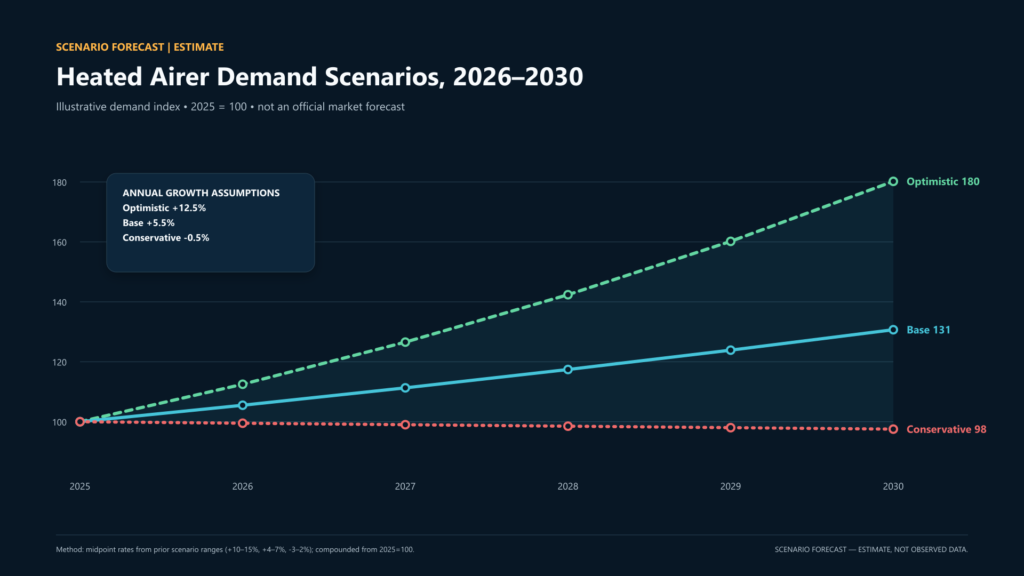
The heated airer category is unlikely to repeat the exceptional growth rates seen during the peak European energy crisis.
However, the market is also unlikely to disappear.
The next phase will be driven by targeted international expansion, stronger safety standards, better product segmentation and more professional consumer education.
Canada, New Zealand and Chile offer the most practical near-term opportunities. Japan offers a more demanding premium niche, while the United States provides a larger but more selective long-term opportunity.
For buyers planning their H2 2026 assortment, the key question is no longer whether consumers need another laundry appliance.
The better question is whether they need a compact, foldable and energy-conscious solution for the clothes they do not want to place in a tumble dryer.
For many households, the answer may be yes.
Looking for an electric clothes drying rack supplier for your market? Contact EVIA to request product specifications, samples, OEM options and a market-specific quotation.
FAQ
What is an electric clothes drying rack?
An electric clothes drying rack is a foldable indoor laundry rack with heated rails. The rails provide gentle heat to help clothes, towels and other textiles dry faster than on an unheated airer.
Which markets offer opportunities for heated airers in 2026?
Beyond the UK, Europe and Australia, promising markets include Canada, New Zealand, Chile, Japan and selected regions of the United States. Each market requires different product positioning and electrical specifications.
When should buyers order heated airers for winter sales?
Northern Hemisphere buyers should normally confirm specifications and production before the autumn sales season. Southern Hemisphere buyers can prepare their next winter programme during the fourth quarter of the previous year.
Which model is better for retail buyers?
Winged heated airers are suitable for entry-level and promotional price segments. Multi-tier electric clothes drying racks provide greater capacity and are more suitable for mid-range and premium positioning.
Can electric clothes drying racks be customised?
Yes. Depending on the manufacturer, buyers can customise voltage, plug type, timer, temperature control, cover, colour, packaging, manuals and private-label branding.